Seoul gets the attention, but if you want to eat seafood the way Koreans eat it — pulled off the boat that morning, sliced raw or thrown on a grill while you watch — you go to the East Coast. And the East Coast town to go to is Sokcho (속초), two and a half hours from Seoul, where the mountains of Seoraksan drop straight into the sea and the harbor is one long row of fish stalls.
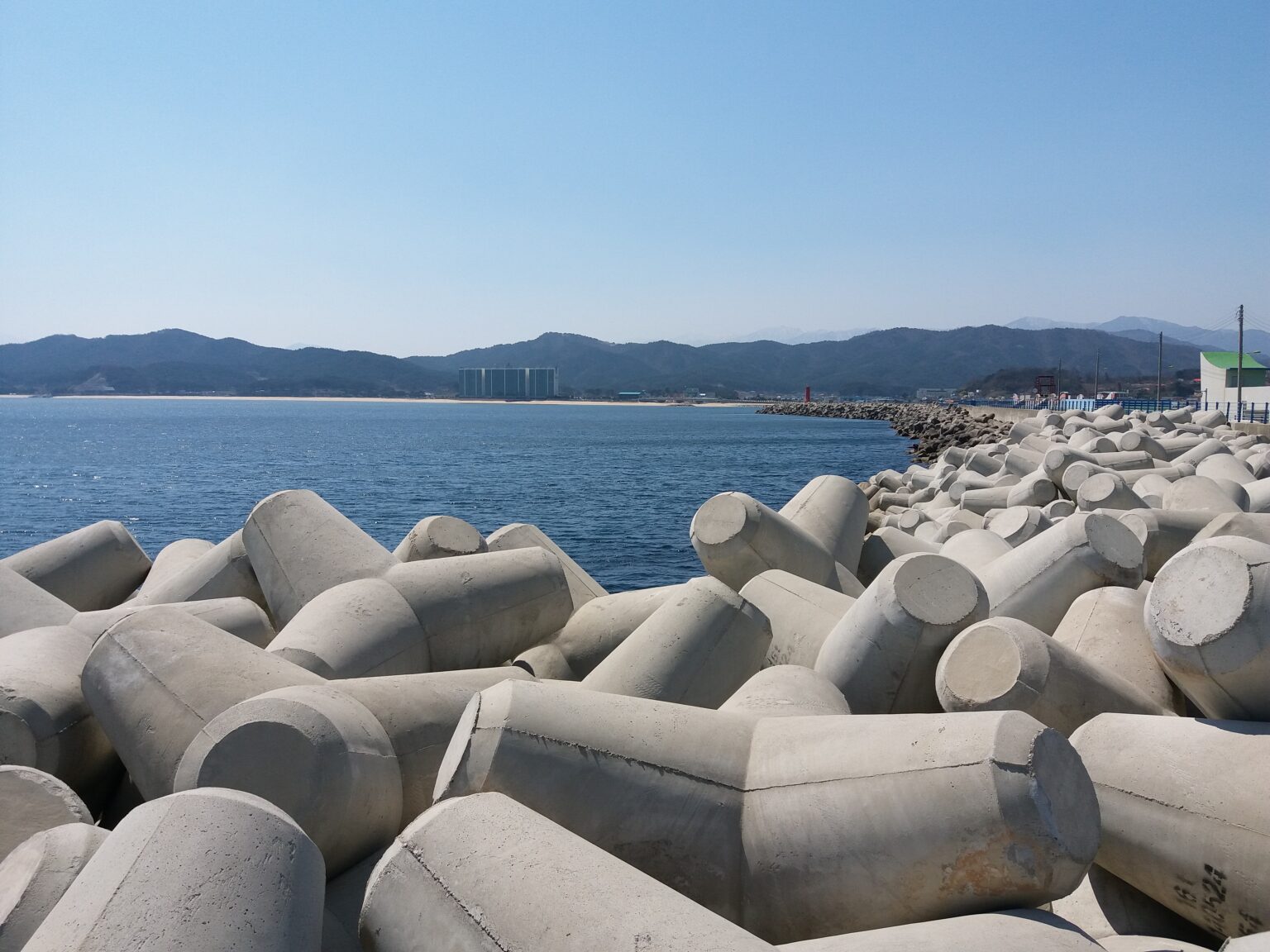
Three harbors, one town
“Sokcho Port” is really three places, all within a short taxi ride of each other:
- Dongmyeong Port (동명항) — the live-fish center (활어센터). Tanks of flounder, rockfish, sea squirt and crab; you pick, they slice. This is where locals go for hoe (raw fish).
- Daepo Port (대포항) — the famous fried-seafood alley (튀김골목): shrimp, squid, oysters and small crabs fried to order in big woks, plus a raw-fish center behind it. Touristy, loud, and worth it.
- Sokcho Jungang Market (속초 중앙시장) — the covered market in the middle of town. Dried squid hanging in rows, grilled fish counters, and the stall queues that tell you what’s good.
What to eat
- Squid (오징어) — Sokcho’s signature. Eat it three ways: sliced raw, dried and torched at the market, or as 오징어순대, a whole squid stuffed with vegetables, noodles and egg, steamed and sliced. The stuffed squid came to Sokcho with refugees from the north after the war and is still the town’s dish.
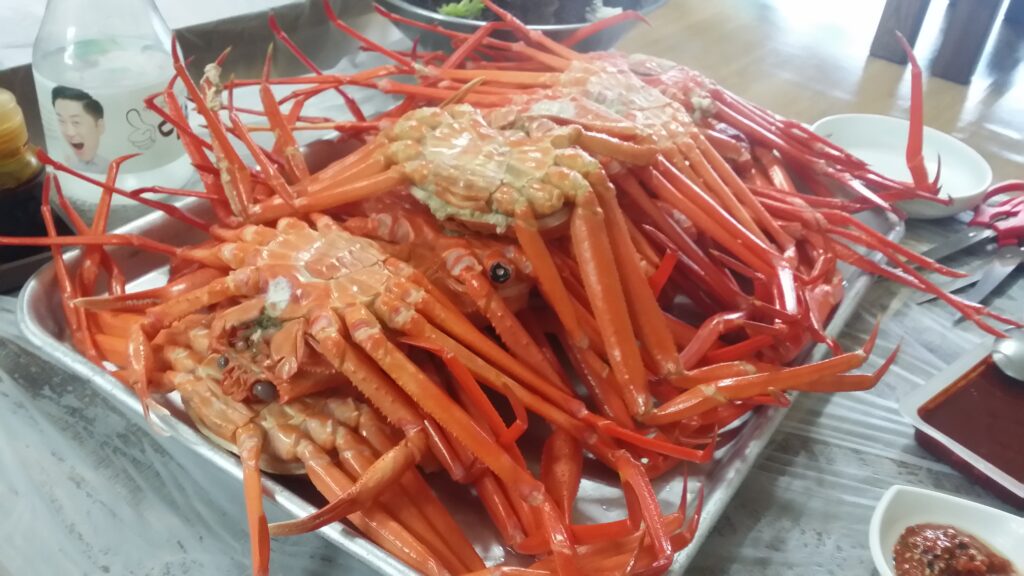
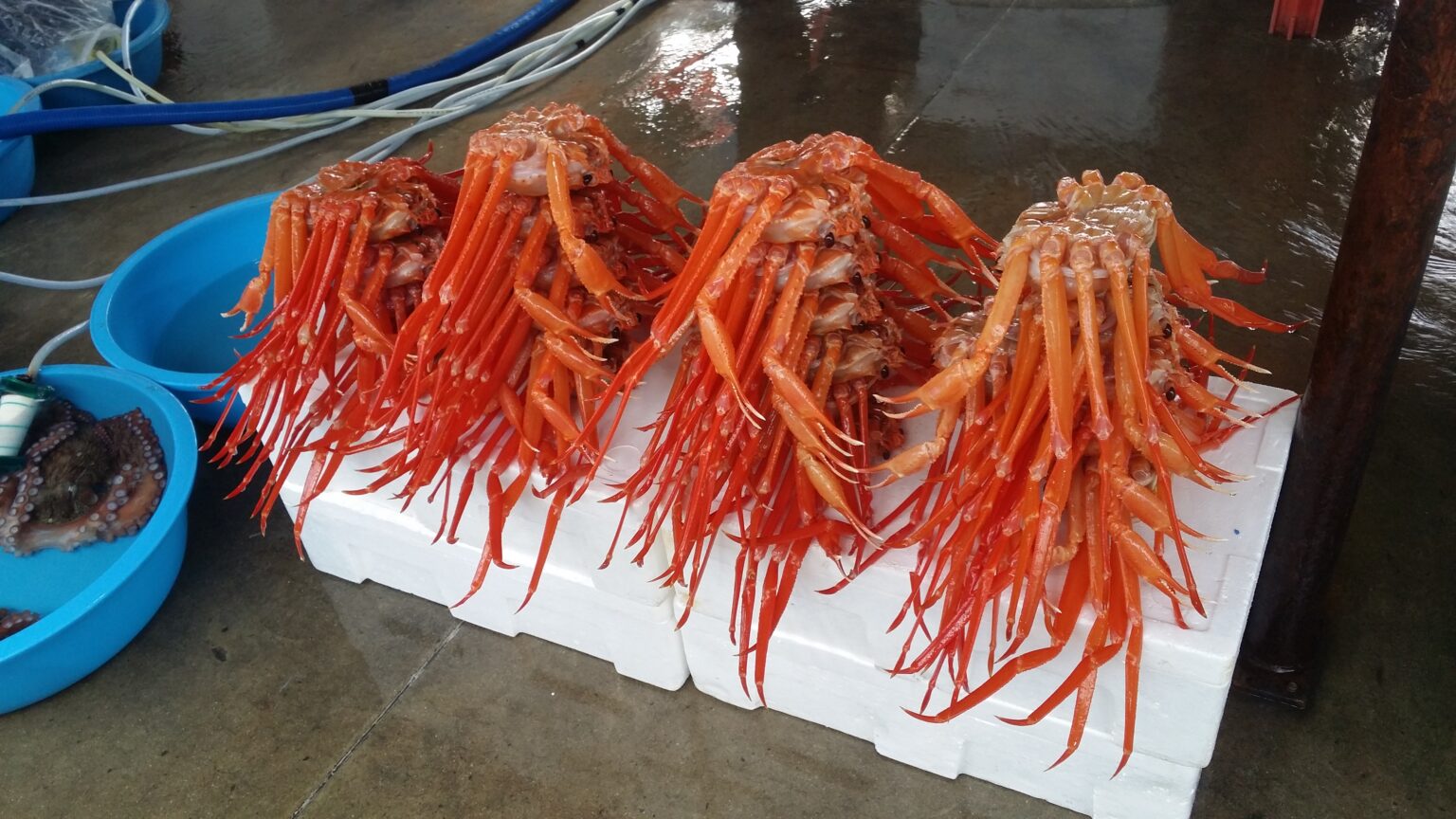
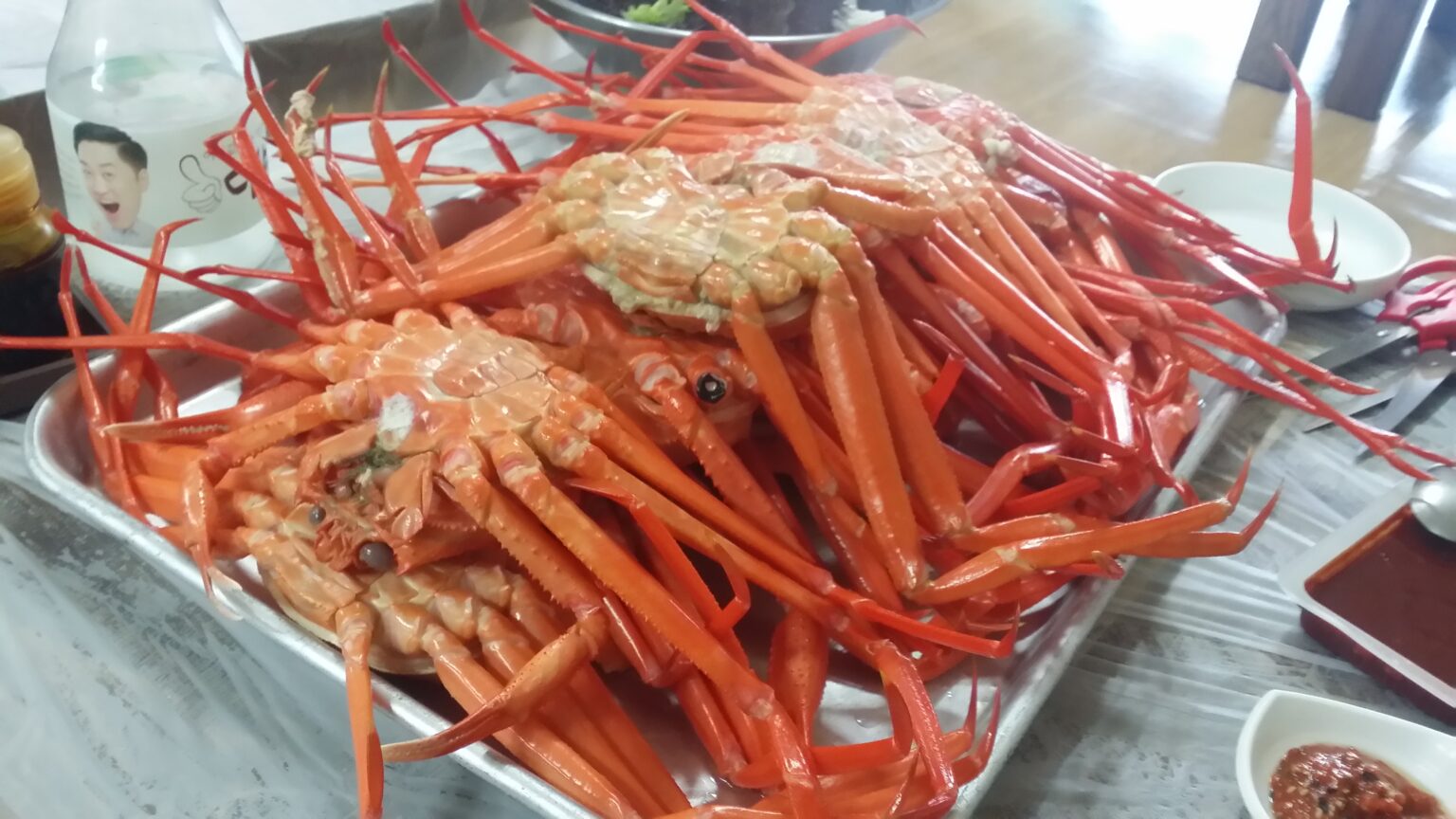
- Snow crab and red snow crab (대게 · 홍게) — Sokcho and Goseong just to the north are the crab coast. Red snow crab is the everyday one and much cheaper; snow crab is the splurge. Restaurants steam them whole and cut them up at the table.
- 물회 (mulhoe) — raw fish in an icy, sweet-and-spicy broth, eaten like a cold soup with noodles. The East Coast’s summer dish, but served year-round.
- Grilled fish (생선구이) — a platter of whatever is in season, grilled over charcoal: mackerel, flatfish, pollack, rockfish. Order one platter for two or three people.
- Winter specials (November–January) — 양미리 (sand lance), tiny fish grilled whole on the sidewalk, and 도루묵 (sailfin sandfish), prized for its roe. If you are there now, this is the thing to order; it is cheap, smoky and you will not find it in Seoul done the same way.
- Not seafood, but mandatory — Sokcho dakgangjeong (닭강정), sweet-glazed crispy chicken from the Jungang Market, sold in boxes that people carry back to Seoul on the bus.
How a raw-fish meal works
At Dongmyeong or Daepo you buy the fish from a stall first (price is by the fish or by weight — ask “얼마예요?”, eolmayeyo, and point), the stall slices it, and you carry the tray upstairs or next door to a sitting room that charges a small table fee (자릿세, usually a few thousand won per person) and brings lettuce, garlic, gochujang, side dishes and maeuntang, the spicy stew made from the bones. Two people can eat very well for ₩50,000–70,000; a crab dinner is more. Cards are accepted at nearly every stall now, but a little cash helps at the smaller ones.
Getting there
- Express bus from Seoul Express Bus Terminal (Gangnam) or Dong Seoul Terminal: about 2 h 30 min, buses every 20–30 minutes, roughly ₩20,000. This is the easy way.
- KTX to Gangneung, then a bus or taxi up the coast (about an hour). Scenic, but the bus from Seoul is simpler.
- Driving — the Seoul–Yangyang Expressway takes you through the longest road tunnel in Korea and drops you at the coast in about two and a half hours. If you have a rental car, this is a great drive.
While you’re there
Abai Village (아바이마을), across the water from the harbor, is where North Korean refugees settled after the war; you cross on a hand-pulled ferry (갯배) for a few hundred won and eat Abai sundae at the small restaurants. Seoraksan National Park is 20 minutes away — the cable car to Gwongeumseong is the lazy way up, and the view of the sea from the top explains why Koreans love this town.
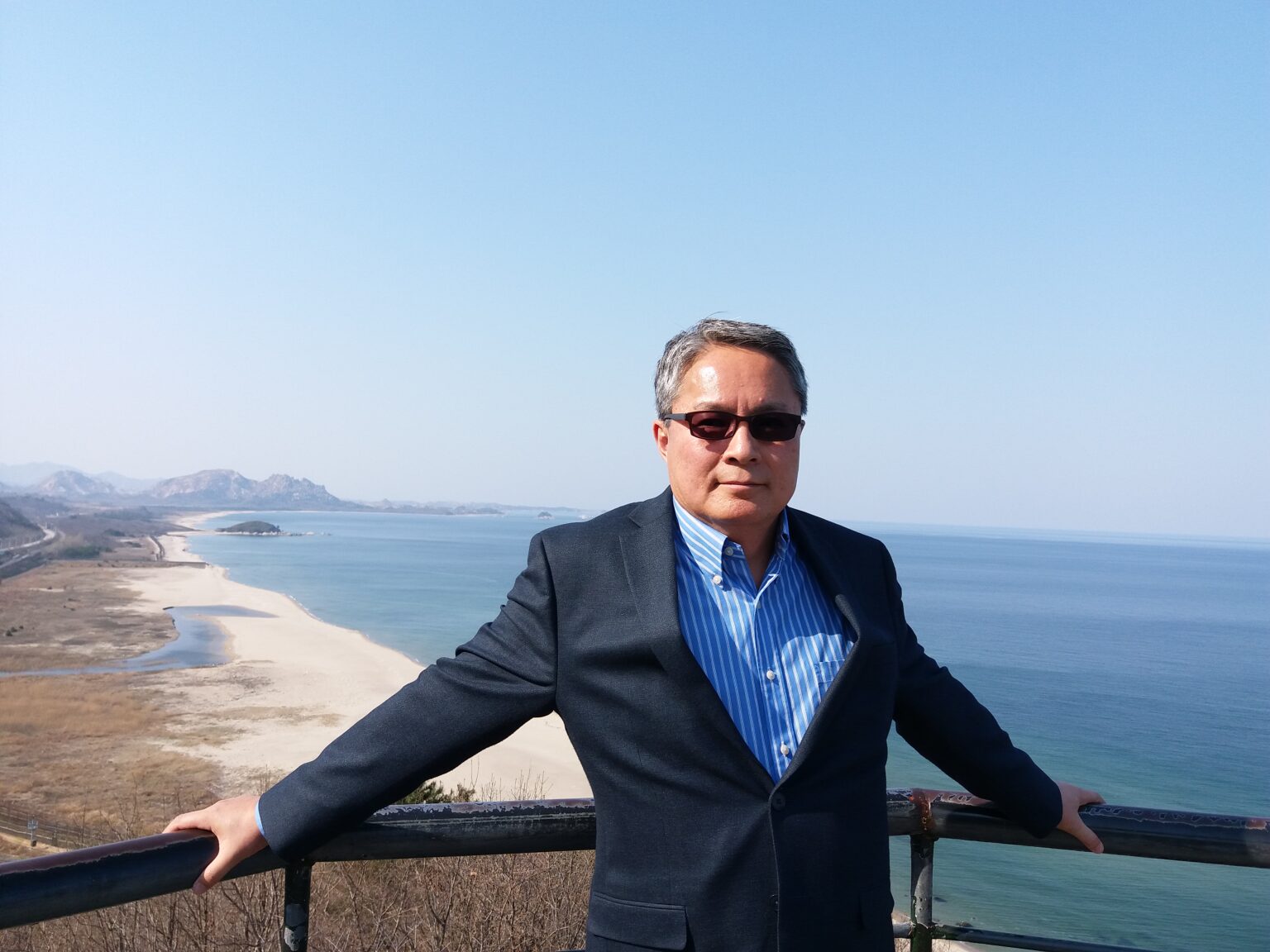
Photos are from our own trips to Sokcho. If you have a favorite stall or a tip, post it in the Culture & Food board.
Leave a Reply